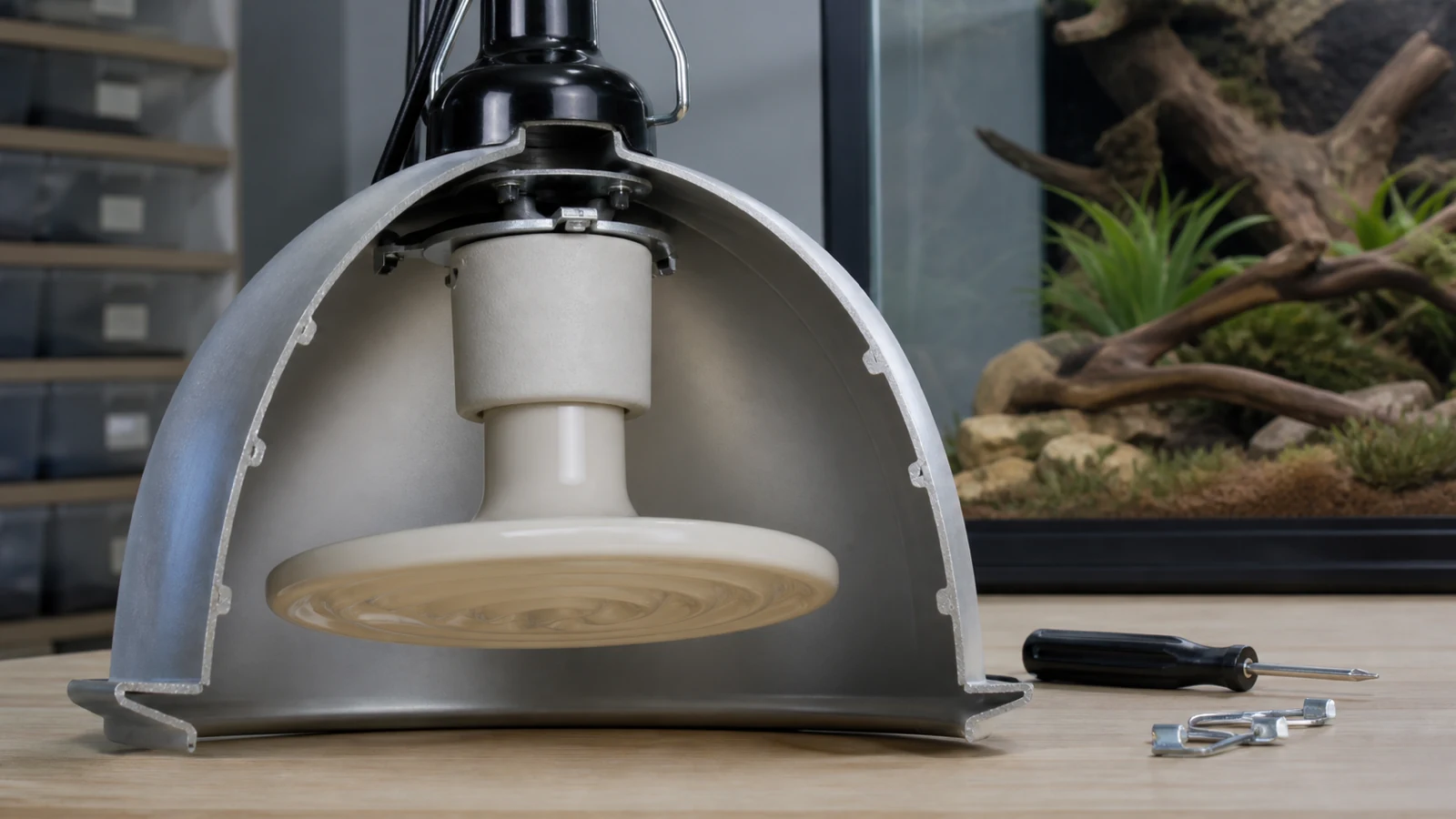
Ceramic Heat Emitter Fixture Wattage Matching Uk
Direct answer: match the ceramic heat emitter to the fixture before you match it to the animal. The socket material, fixture rating and product instructions must support the emitter wattage, and the heat source should be controlled by a suitable thermostat. If the fixture is unknown, plastic, unmarked or explicitly not for ceramic heat emitters, do not use it for a CHE.
A ceramic heat emitter can run hot without visible light. That makes the fixture and thermostat plan more important, not less.
The diagnostic ladder
- Fixture approval: does the fixture or holder documentation say it is suitable for ceramic heat emitters?
- Socket material: is the socket ceramic or otherwise clearly rated for high heat?
- Wattage headroom: is the emitter wattage below the holder rating with sensible margin?
- Thermostat: is there a pulse, on/off or other suitable thermostat arrangement for the non-light heat source?
- Guard and contact risk: can the animal, keeper or decor touch the hot emitter or dome?
- Measurement: can you monitor overnight air and surface temperatures after installation?
Do not assume every deep dome accepts a CHE
The phrase "deep dome" describes shape, not universal emitter compatibility. Some UK deep dome listings specifically note that a product is not recommended for ceramic heat emitters; this UK deep dome listing is a useful reminder to read the individual instructions rather than rely on category language.
Socket and wattage come before emitter size
UK ceramic holder listings such as this ProRep ceramic holder page market ceramic holders for ceramic heaters and E27 lamps with explicit rating information and safety accessories. That is the type of clarity you want before putting a CHE into service.
If the enclosure already overshoots with the current heat source, a higher-wattage emitter is the wrong next step. Reduce heat, improve control or revisit ventilation instead.
Thermostat and guard
Because a CHE gives heat without visible light, it is easy to forget it is running. UK care content such as this reptile heat lamp guide warns that ceramic heat sources need appropriate high-heat holders. Add the control layer too: a thermostat matched to the heat source, with the probe placed where it measures the relevant warm zone.
A guard is sensible where contact is possible, especially in wooden vivariums, open tables or enclosures with climbing species. The guard does not make an unsuitable fixture suitable; it reduces contact risk after the electrical and heat-rating questions are answered.
When not to buy the bigger CHE
Do not buy a stronger emitter if the fixture rating is unclear, the thermostat is missing, the animal cannot avoid the warm area, or the overnight test already keeps the enclosure warm enough. Bigger heat without feedback turns a husbandry problem into a safety problem.
Conditional next step
If your current problem is an unsuitable holder and you have already planned thermostat control and contact protection, compare ceramic-socket dome options on the deep dome fixture product page. If the current enclosure is too warm, skip the product search and correct the heat plan first.