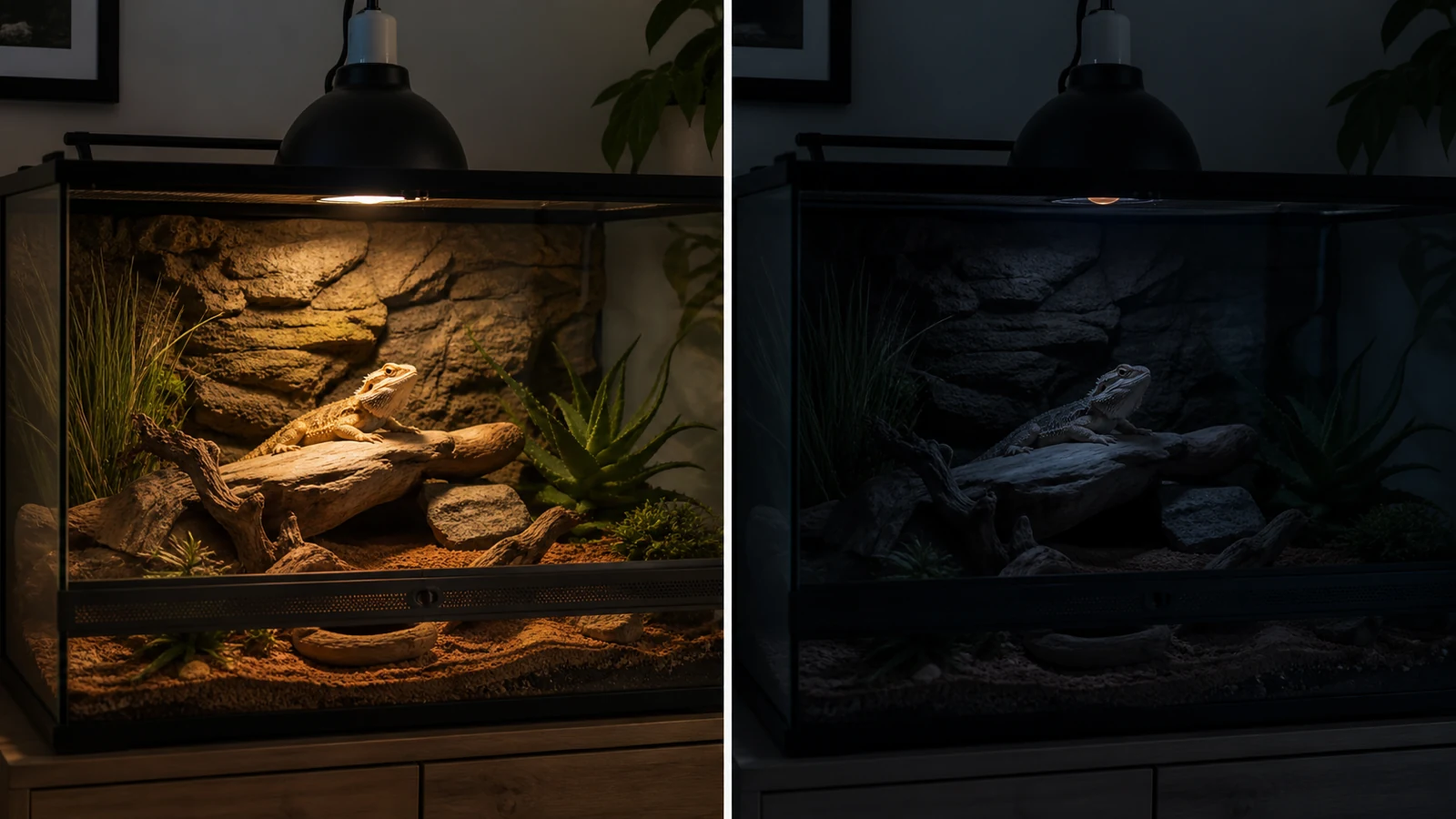
Reptile Lamp Fixture Timer Day Night Schedule Uk
Direct answer: use timers for light and daytime basking routines, but keep heat under temperature control rather than clock-only control. A timer can decide when a lamp is allowed to run; a thermostat decides whether the enclosure is warm enough or too warm.
This matters in UK homes because winter room temperatures, summer sunlight and central heating schedules can change the enclosure even when the timer has not changed.
A simple day-night pattern
- Day: timed basking lamp and UVB period based on the species plan.
- Warm-side control: thermostat or measured dimming setup matched to the heat source.
- Night: no bright basking lamp. If extra heat is needed, use a suitable non-light heat source under thermostat control.
- Weekly check: remeasure after room temperature changes, bulb changes or enclosure moves.
Where fixture timers help
A timer is helpful for repeatability. It can turn daytime basking or lighting on and off while you are at work, and it can reduce the chance of accidentally leaving visible lamps on too long. UK day-night thermostat products, such as this day-night dimming thermostat listing, show how lighting schedules and temperature parameters are treated as related but separate controls.
Where timers fail
A timer cannot tell that a wooden vivarium is still warm from the day, that a cold room has dropped further than expected, or that a probe has been moved. It only follows the clock. That is why products such as this day-night thermostat listing separate day/night targets from timed auxiliary sockets.
Do not automate a high-watt ceramic heat emitter by timer alone. The whole point of night heat is to maintain a safe range without bright light, so the heat source needs feedback.
Avoid bright heat overnight
For many common reptile setups, bright basking lamps are a daytime tool. UK heat-lamp guidance such as this reptile heat lamp guide advises against bright heat lamps overnight and points to non-light sources when night warmth is required.
Automation checklist
- Know the species photoperiod you are trying to support.
- Put visible basking heat in the day period, not as all-night glare.
- Use a thermostat for heat sources that run unattended.
- Place the probe where it reflects the zone you are controlling.
- Remeasure after UK seasonal room changes.
- Keep the fixture switch accessible so a human can shut the system down quickly.
Proceed or pause?
Proceed with a timer when it is controlling routine light timing and the temperature-control layer is already solved. Pause if the timer is being used as a substitute for a thermostat, especially for ceramic heat emitters, night heat or any setup that runs while nobody is watching.