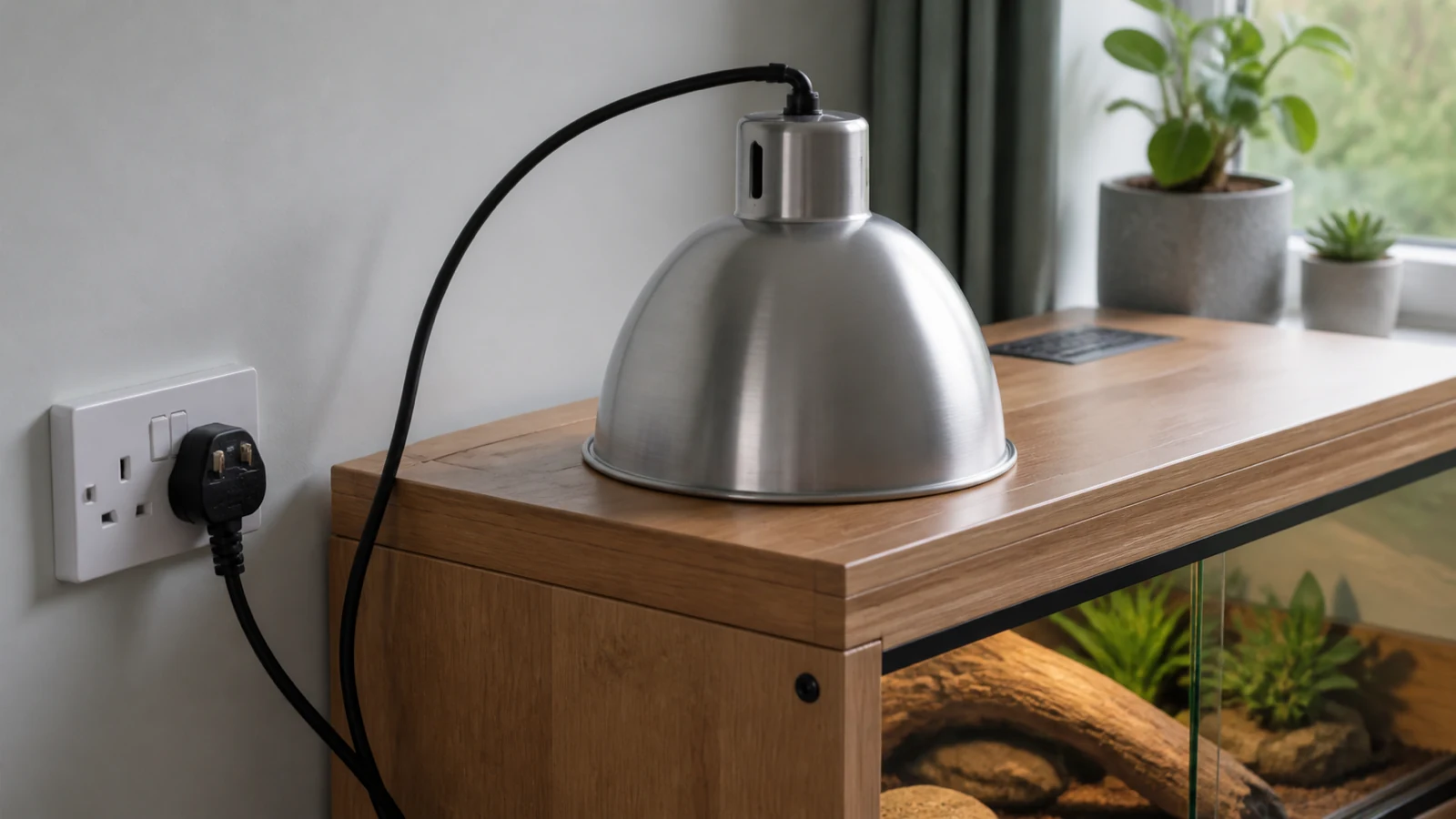
UK Plug Reptile Lamp Fixture Checklist Before You Power On
Direct answer: before powering a reptile lamp fixture in the UK, check the plug, socket material, cable condition, wattage headroom, switch type, mounting position and temperature-control plan. If any of those are unclear, do not test it over a live vivarium first.
Many online listings mix UK, EU and US options on the same page. The safest habit is to treat the fixture as electrical equipment first and reptile equipment second.
The pre-power checklist
- Plug: confirm it is the UK plug version you intended to buy, not an adaptor workaround.
- Socket: use ceramic or other heat-appropriate socket material for high-heat bulbs or emitters.
- Cap type: confirm the lamp and holder are both E27 if that is the system you are buying.
- Wattage: the fixture rating must comfortably cover the lamp or emitter in use.
- Cable: check there are no cuts, flattened sections, loose strain relief points or crushed bends.
- Switch: know whether it is simple on/off, dimmer or timer, and do not confuse that with thermostat control.
- Mounting: make sure the dome cannot fall, touch decor, or sit where an animal can contact a hot surface.
- Measurement: have an infrared thermometer, probe thermometer or thermostat setup ready before leaving it running.
Plug and socket: the two early filters
The plug tells you whether the product is meant for your mains setup; the socket tells you whether the lamp holder is suitable for heat. UK reptile electrical listings often make the plug explicit, such as this UK-fitted 240V plug controller listing. Do not rely on a vague "universal" note when the product will sit over a warm enclosure.
For the socket, ceramic is the usual material to look for around heat emitters and basking lamps. UK retailers list ceramic E27 holders with wattage and cable details, for example this ceramic E27 lamp holder listing.
Wattage headroom matters more than hope
Do not buy a high-wattage emitter first and then try to make an unknown fixture cope with it. Read the holder rating, the emitter rating and the enclosure plan together. UK merchant copy for ceramic holders, such as this high-temperature ceramic holder description, shows why buyers should expect clear material and rating information before use.
Red flags
- Plastic socket language around high-heat ceramic emitters.
- No visible wattage information in the product listing or instructions.
- Unclear plug type, especially if the listing shows several regional variants.
- A switch marketed as if it were a thermostat.
- Loose cable entry, damaged insulation or a hot smell during testing.
Who should wait before powering on?
Wait if you cannot measure basking surface temperature after installation, if the plug type is wrong, if the wattage rating is missing, or if the fixture would sit where the animal can touch it. Waiting is not overcautious; it is cheaper than debugging heat and electrical problems over a live animal.
Conditional next step
If your checklist points to a UK-plug E27 deep dome with a ceramic socket and a clear switch choice, you can compare the relevant variant on the UK plug deep dome product page. If your uncertainty is about thermostat type or safe temperatures, solve that control question before buying another fixture.