Choosing a reptile lamp dome for a living room: bulb recess, glare and placement
Choosing a reptile lamp dome for a living room: recess, glare and placement
TL;DR: Treat bulb recess as one buying consideration alongside lamp direction and the distance required for your bulb and species. Veterinary guidance places lamps above the basking zone, aimed downwards rather than into the reptile’s line of sight. Choose a fixture for that arrangement first, then assess the view from your seating position.
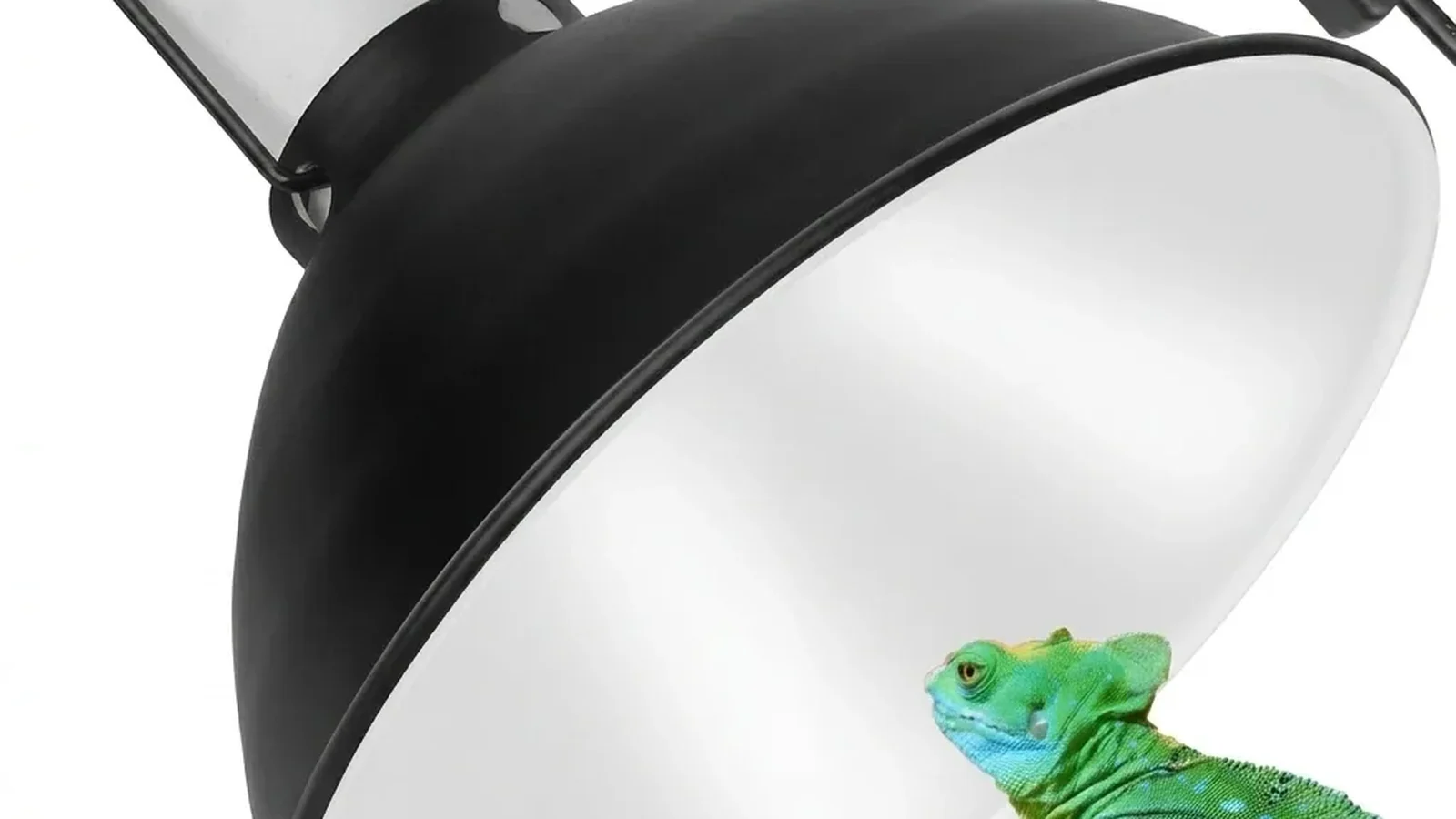
When comparing reptile lamp dome depth, ask where the face of your chosen bulb will sit relative to the rim. For this guide, “recessed” means that the bulb face sits inside the shade rather than projecting beyond it. Ask for confirmation for the exact bulb and fixture combination you intend to buy.
Separate the room view from the animal’s view
A useful way to approach the purchase is to ask two separate questions: “Can I avoid a distracting view of the bright source from the sofa?” and “Will the lamp point down towards the basking zone rather than towards the animal’s eyes?” Consider both before choosing the shade.
In UVB Lighting for Reptiles, veterinary author Frances Baines advises positioning all lamps above the basking zone, aimed downwards, to avoid glare, stress and possible eye damage. Use that orientation as the starting point; do not choose a sideways lamp angle simply to conceal the bulb from someone watching television.
What a deep-dome description establishes
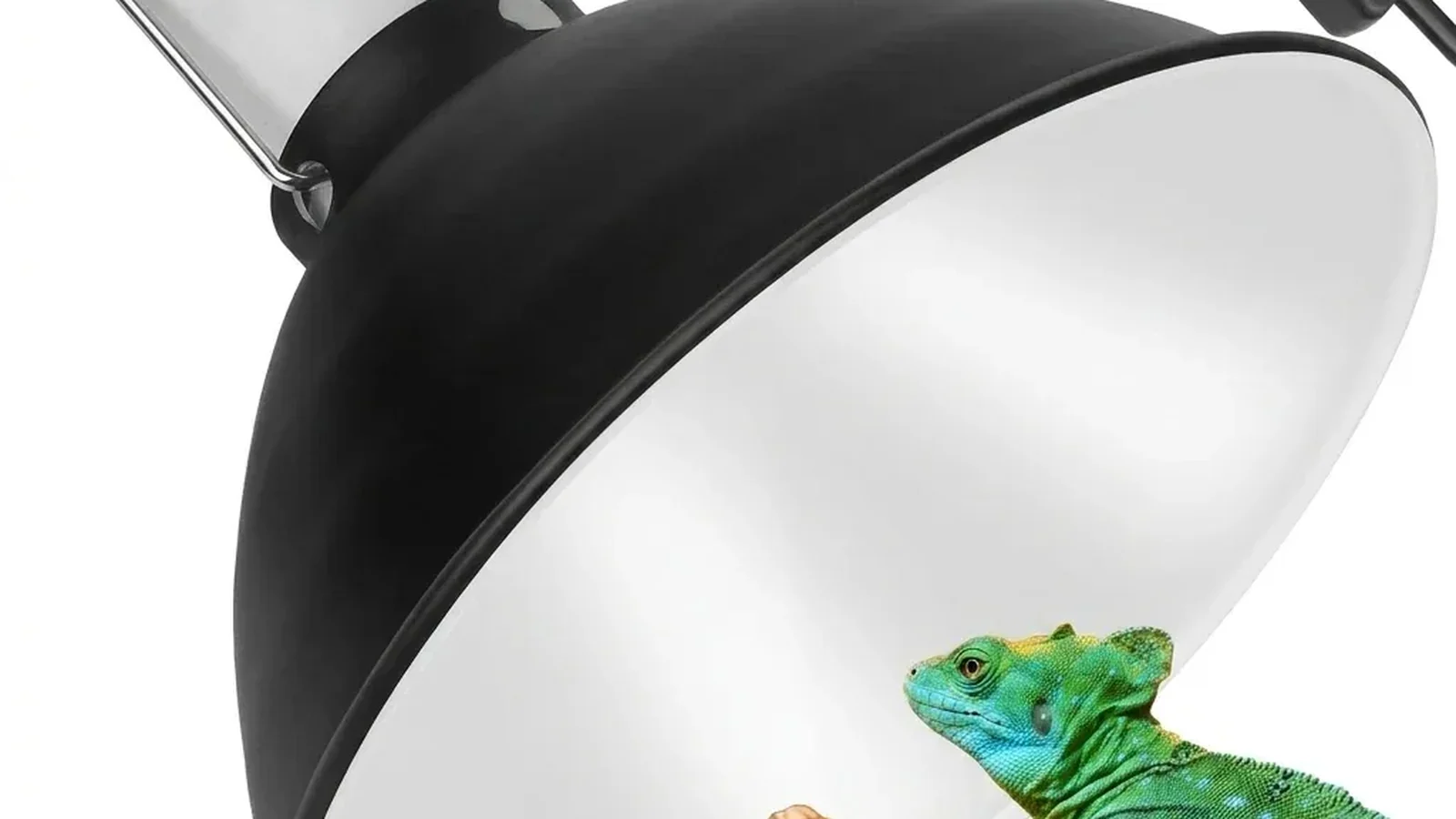
ReptileLam describes its extended dome depth as keeping compact UVB bulbs from protruding beyond the rim, preventing room glare and directing UVB down into the vivarium. These are the seller’s product claims. Treat them as a reason to ask about your chosen bulb, rather than as a measured guarantee of comfort from every seat or confirmation that every compact bulb fits.
Depth also cannot settle the animal’s UVB requirements by itself. Baines explains that UVB intensity diminishes with distance and that irradiance depends on lamp strength and beam shape. Her guidance also states that the required distance depends on the bulb selected and the species kept.
My recommendation is therefore to shortlist compatible fixtures that can maintain the required downward placement and bulb distance, then compare bulb recess and the room view within that shortlist. A concealed bulb should be one part of the decision, rather than the evidence that the whole lighting arrangement is suitable.
Compare the bulb, shade and sightlines before buying
Use the following proposed buying checklist to keep physical fit, household viewing and the animal’s lighting needs in the same decision. It is a way to organise your enquiries, rather than an installation procedure or a universal clearance rule.
1. Ask about the exact installed pairing
Give the retailer the full bulb model and fixture model. Ask: “With this bulb fitted as intended, will its face remain inside the dome rim?” Request a dimensioned drawing or confirmation of the installed position, including any guard supplied for that fixture.
For your comparison notes, record the bulb-face position relative to the rim rather than assuming that a product labelled “deep dome” answers the fit question. If you receive only a general fixture dimension, ask which points it measures and whether it establishes the position of your particular bulb. Leave that entry unconfirmed until the answer is clear.
ReptileLam’s compact-UVB FAQ links its extended depth to preventing protrusion. That seller statement is useful context for the enquiry, but it does not supply an installed recess measurement for a named bulb model.
2. Keep distance separate from recess
Baines advises checking manufacturer recommendations because different bulb types require different distances to provide effective UV Index levels without harmful exposure. She also notes that the basking area or light may need to be raised or lowered according to the bulb and species.
For each candidate, therefore, record the manufacturer’s placement guidance alongside the fit answer. Do not select a new mounting height solely to make the shade look less conspicuous in the room. First establish whether the proposed arrangement meets the lighting guidance for the animal.
3. Consider beam direction as well as the shade
Reflectors gather UV rays into a forward-facing beam, according to Baines. Her guidance also explains that irradiance at a given distance depends on both lamp strength and beam shape. A visual judgement about how well a shade conceals a bulb is therefore insufficient to establish UVB exposure.
Keep two separate entries in your shortlist: confirmation of the intended lighting arrangement, and your assessment of the room view. Do not use one as a substitute for the other.
4. Assess the room view without staring into the lamp
My suggested room-view check is to consider your usual sofa and chair positions once a suitable downward arrangement has been identified. Ask whether the bright source would be visible from those positions; request an illustration or demonstration from the supplier if necessary. Avoid looking directly into the light source: Arcadia explicitly includes that precaution in its ceramic clamp-lamp data sheet.
If the room view remains distracting, reconsider the shortlist or seating arrangement while preserving the required lamp direction and distance. This keeps the household preference within the animal’s lighting constraints.
Make the purchase decision with the right confirmations
Before ordering, put the exact bulb and fixture models, the intended placement and the unanswered fit questions into one enquiry. My suggested message to the retailer is:
I am choosing a fixture for a living-room vivarium. Can you confirm whether my chosen bulb is compatible with this fixture and whether its face will remain inside the rim when fitted as intended? Please provide the relevant compatibility and placement instructions, and clarify what the published dimensions measure. I also need to preserve the lighting arrangement required for my species.
Use the response to decide what happens next:
- If compatibility and the bulb’s position are confirmed: assess the room view within the placement permitted by the bulb and fixture instructions.
- If the answer is only “it is a deep dome”: request confirmation for your named bulb before treating the fit as settled.
- If concealing the source would require changing the intended direction or distance: revisit the fixture shortlist or room arrangement before buying.
The reason for preserving those constraints is practical: Baines recommends lamps above the basking zone aimed downwards, and states that the required distance depends on the bulb and species. A purchase decision should account for both, alongside your preference for a less distracting view from the sofa.
Handling matters too. ReptileLam states that its aluminium exterior becomes hot during prolonged use and should be allowed to cool before handling. Follow the instructions for the actual fixture you buy; this selection guide does not replace them.
Sources to consult before choosing
- UVB Lighting for Reptiles — Frances Baines, LafeberVet: read the guidance on downward orientation, beam shape and manufacturer-recommended distances.
- ReptileLam deep-dome fixture product page: consult the seller’s compact-UVB compatibility description and hot-surface advice, then ask about your exact bulb combination.
- Arcadia ceramic clamp-lamp product data sheet: a manufacturer example that explicitly warns against looking directly into the light source. Its product-specific details apply to the Arcadia range described.
Choose on the basis of a confirmed combination and an appropriate lighting arrangement, then use bulb recess and the seating view to refine the choice.